
Hard water and high dissolved solids are often discussed as though they are the same problem. They are not. A water softener primarily addresses hardness, while reverse osmosis reduces a broader range of dissolved impurities.
For commercial and industrial facilities in Nagpur, selecting between an RO system and a Water Softener Plant depends on the intended application, source-water analysis, and required output quality. In some cases, the two systems are used together rather than treated as alternatives.
What a Water Softener Does
Hardness is mainly associated with calcium and magnesium salts. These minerals can form scale on heating surfaces, pipelines, fixtures, membranes, and process equipment.
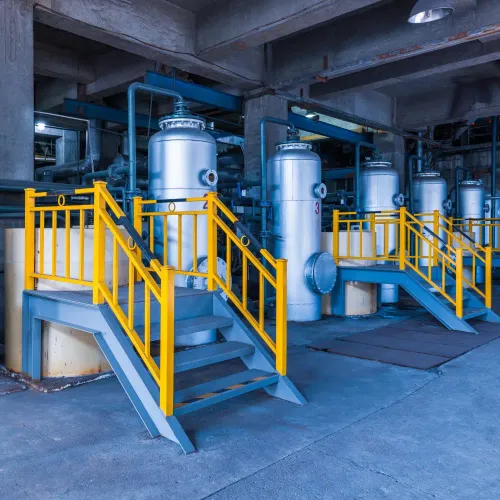
A softener commonly uses ion-exchange resin to replace hardness-causing ions with sodium ions. The resin is periodically regenerated using a brine solution.
Softened water may be useful for:
- Boiler pretreatment
- Cooling systems
- Commercial laundries
- Hotels and hospitals
- Heat exchangers
- Process washing
- RO pretreatment
- Plumbing and utility applications
Softening can reduce scale-related problems, but it does not substantially remove all dissolved salts.
What an RO Plant Does
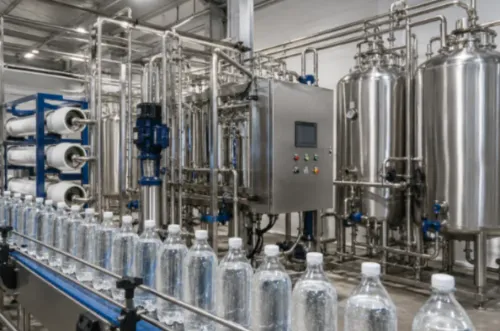
Reverse osmosis forces water through semipermeable membranes. This process can reduce dissolved salts and several other impurities, depending on the design and operating conditions.
RO treatment may be selected when the facility requires:
- Lower total dissolved solids
- Controlled conductivity
- Treated drinking water
- Process water with defined quality
- Feed water for further polishing
- Reduced mineral content
An RO plant creates both treated water and a reject stream, whereas a softener requires periodic regeneration and produces regeneration wastewater.
When Softening Alone May Be Appropriate
A softener may be sufficient when hardness is the principal concern and the application does not require substantial TDS reduction.
For example, a commercial laundry may need to reduce hardness to improve washing performance. A facility using water in heat-transfer equipment may focus on limiting scale. In such cases, RO treatment may be unnecessary if the remaining water characteristics are acceptable.
When RO Becomes Necessary
RO is more relevant when dissolved solids must be reduced to meet drinking, production, or equipment requirements. However, hard feed water can scale RO membranes.
If the source water has high hardness, a softener or suitable antiscalant programme may be incorporated before the RO plant. This is why the decision is not always “softener versus RO”; the correct solution may be “softener before RO.”
Compare Operating Responsibilities
Before choosing either technology, facility managers should consider:
- Salt consumption for regeneration
- Membrane-cleaning requirements
- Filter replacement
- Reject-water handling
- Operator availability
- Space for tanks and vessels
- Automation level
- Water-quality monitoring
A lower initial price does not necessarily mean a lower lifecycle cost. Frequent scaling, excessive salt use, poor recovery, or premature membrane replacement can alter the economics.
Start With Testing and Application Requirements
Orenus Water Age Technology evaluates source-water characteristics and usage requirements for commercial and industrial projects in Nagpur. This helps determine whether softening, RO treatment, or an integrated configuration is appropriate.
The right decision begins with two questions: What is present in the incoming water, and what quality does the application genuinely require? Once those answers are clear, buyers can avoid installing an overly complicated system or choosing equipment that solves only part of the problem.