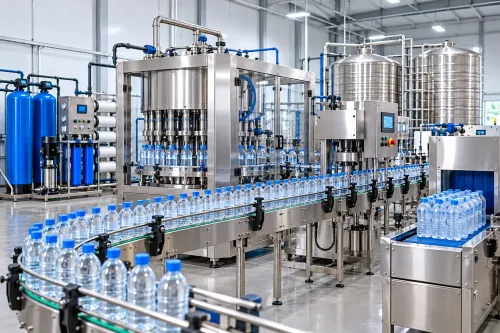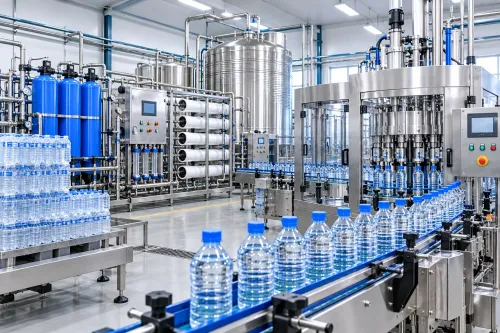
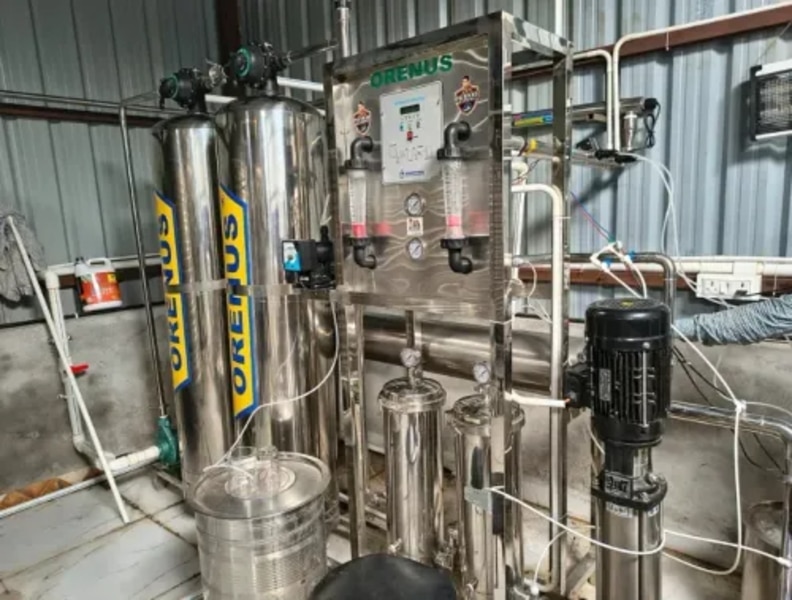
A plant’s rated bottle-per-minute figure does not tell you how many saleable bottles you will dispatch, how much water each bottle consumes, or how reliably the line will run. By measuring usable output, controlling Nagpur’s source and climate risks, and keeping evidence for every batch, you can turn post-commissioning operation into a predictable business process.
Key takeaways
- Measure saleable bottles after rejects, downtime and changeovers.
- Track source-water quality, heat and humidity alongside daily output.
- Keep batch test reports, production records and release decisions together.
- Use preventive maintenance and operator checks to protect stable production.
Which benefits appear when the plant runs consistently?
The durable gain is control: repeatable saleable bottles and litres, not a faster machine display. Stable settings for rinsing, filling, cap loading, coding and labelling reduce underfills, loose caps, misprints and damaged labels, so less product enters rework and daily output becomes easier to schedule.
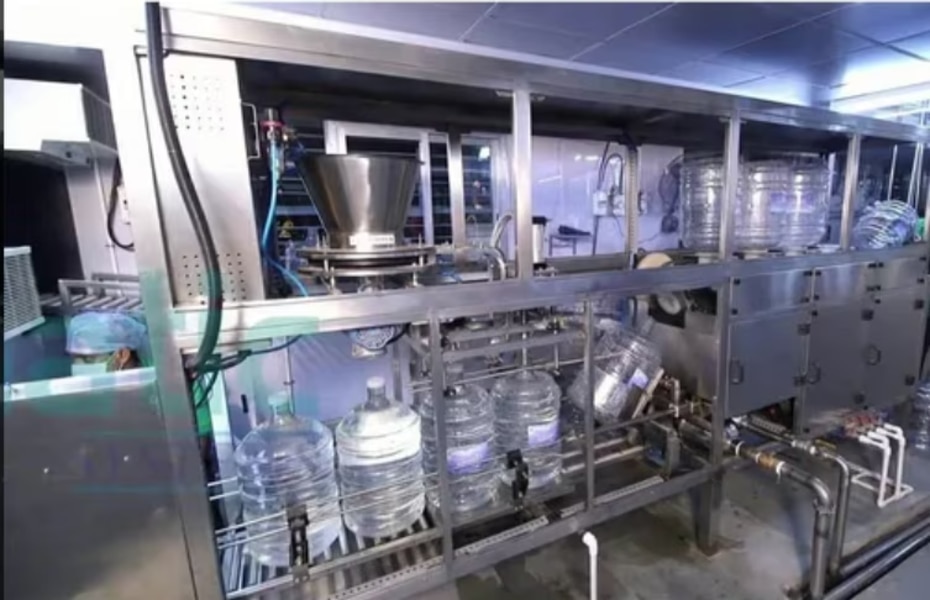
The practical test for a packaged drinking water bottle plant for benefits in Nagpur is the flow from source water to released batch. Production staff know the required bottle count, quality staff know which checks to complete, and dispatch staff know which finished cases are available.
Fewer tasks depend on one experienced operator, while consistent bottle presentation reduces customer complaints and makes the cause of a deviation easier to assign.
| Measure | What it tells you | Why it matters |
|---|---|---|
| Treated-water production | Water available after treatment | Does not prove bottles are filled, accepted or ready to sell |
| Saleable bottles and litres | Output passing fill, seal, code and label checks | Shows the usable production result |
| Accepted finished cases | Stock released for dispatch | Supports accurate order planning and targeted quarantine |
Compare planned dispatches with accepted finished cases, not treated-water volume alone. Rinsing losses, changeovers, rejects and short stoppages otherwise create false capacity.
Higher output during the first weeks is a short-term gain. The lasting benefits are fewer filling and capping errors, faster order fulfilment, predictable dispatches and batch traceability linking treatment, tests, packaging and release records.
Store finished cases in a cool, clean, pest-controlled area; excessive heat and sunlight can still damage packaging and erase the benefit of consistent production.
How do you calculate usable output instead of quoting rated capacity?
A 100-bottles-per-minute line has 48,000 rated bottle positions in an eight-hour shift. The stated example deducts 30 minutes for start-up flushing, 40 for sanitation, 35 for label and cap changeover, 25 for planned maintenance and 30 for short stoppages, leaving 7 hours 20 minutes; at 100 BPM, that equals 44,000 filled bottles.
Check the arithmetic before using this figure: those deductions total 160 minutes, which leaves 5 hours 20 minutes and 32,000 filled bottles if they are separate losses. The 44,000 result assumes 40 minutes of net lost time because some activities overlap. A 30 BPM or 200 BPM catalogue rating has the same limitation.
Use these measures:
- Line availability = running minutes ÷ scheduled minutes × 100.
- Accepted-bottle yield = saleable bottles ÷ filled bottles × 100. At 3% rejection, 44,000 becomes 42,680 saleable bottles.
- Saleable litres per operating hour = saleable bottles × bottle size in litres ÷ running hours.
- RO recovery = permeate volume ÷ RO feed volume × 100; record RO reject, filter backwash, cleaning water and initial flushing water separately.
- Electricity per saleable litre = total sub-metered kWh ÷ saleable litres. Meter the RO high-pressure pump, compressor, blower and packaging equipment.
- Labour hours = people assigned × hours worked, including sanitation and changeover.
Record raw-water cubic metres, reject-water routes, litres sold and each downtime cause. This reveals drinking water bottle plant efficiency in Nagpur more accurately than rated capacity.
How do Nagpur’s water and climate conditions affect daily operation?
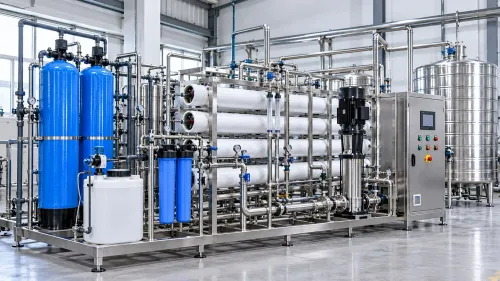
Borewell hardness, turbidity and TDS determine how quickly pretreatment loads and RO performance changes. Hard water increases antiscalant demand and scaling risk; turbidity consumes multimedia-filter capacity, shortens cartridge life and raises differential pressure. Track raw-water pH, conductivity, hardness, TDS and turbidity after monsoon changes instead of using one fixed recipe.
Use source-water testing and weekly trend review to adjust backwash frequency, antiscalant dose and cartridge replacement. Run a jar test before changing coagulant or other pretreatment chemicals when turbidity or organic load shifts. Rising RO pressure, falling permeate flow or declining pump performance signals fouling, scaling or a restricted cartridge that needs investigation.
Nagpur’s heat, dust and power interruptions also reduce usable output. Keep PET preforms, empty bottles, caps and filled cases under cover, away from direct sunlight and excessive heat. Validate ozone concentration, contact time and residual at the actual water temperature and organic load; a generator’s nominal setting does not prove disinfection performance.
- Protect storage tanks, maintain clean compressed air, and provide standby power for essential pumps, controls and treatment equipment.
- Write a restart procedure covering tank levels, flushing, UV, ozone residual, RO conductivity and product release after an interruption.
- Inspect the RO high-pressure pump, membranes, UV unit, ozone generator, air compressor, bottle blower, filler and capper on a planned schedule.
- Review these records together; that is where packaged water plant operation benefits in nagpur become fewer stoppages and steadier dispatches.
What quality and compliance evidence must exist for every released batch?
Do not release a batch until authorised staff have reviewed source-water results, treatment-stage checks, bottle and preform inspections, cap fit, seal integrity and fill volume. Take finished-water samples for microbiological testing, review chemical results, and quarantine any lot with a failed or missing result.
Maintain these records for each batch:
- Raw-water reports and treated-water results
- RO pressure, conductivity and recovery logs
- Filter changes, cleaning and sanitation records
- Preform, bottle, cap and label inspection records
- Batch code, production count and rejection count
- Corrective-action reports and retention-sample details
Traceability must connect the source, treatment date, production line, packaging materials, test results, corrective actions and dispatch records. That link lets you quarantine one affected batch instead of losing unidentified stock from several production days.
Packaged drinking water and natural mineral water are not interchangeable categories.
| Product type | What the claim requires | What goes wrong |
|---|---|---|
| Packaged drinking water | Treatment and conformity to current BIS IS 14543 and applicable FSSAI controls | RO treatment alone does not authorise mineral or source claims |
| Natural mineral water | Verified qualifying source and composition, with permitted processing and declarations | Printing the claim before verification creates a labelling and compliance failure |
Before printing labels, verify the current BIS IS 14543 requirements, BIS licence status, approved laboratory or testing arrangements, label declarations and surveillance obligations. Check food-business licensing and other applicable FSSAI controls for the actual Nagpur site.
What support and performance controls protect the benefits after launch?
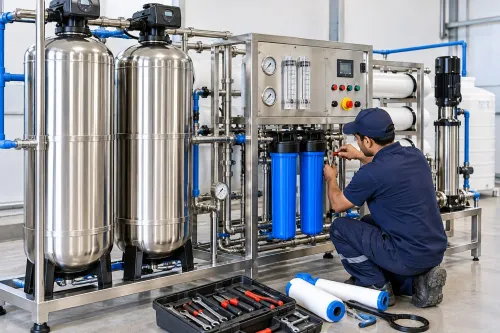
Pay for support that prevents a missed dispatch, not merely a technician who arrives after failure. The contract should combine preventive maintenance, troubleshooting, records review, operator training and documented response times.
1. Require a maintenance schedule with inspection intervals, cleaning methods, spare-part lists and acceptance checks for membranes, high-pressure pumps, UV, ozone, compressors, blow-moulding equipment, filler, capper and coding systems. Record differential pressure, conductivity, cap torque and stoppage causes after each visit.
2. Review trends before they become failures. Rising differential pressure signals fouling, falling RO recovery signals water-balance trouble, abnormal conductivity signals treatment breakdown, and repeated short stoppages expose an unstable line. Bottled water production plant support in nagpur is valuable when technicians connect these records to corrective action.
3. Use a dashboard covering saleable litres per cubic metre of raw water, RO recovery, kWh per saleable litre, microbiological pass rate, filler availability, packaging rejection rate, changeover time and mean time between failures. Bottles per hour alone can hide wasted water, high rejects and unstable quality.
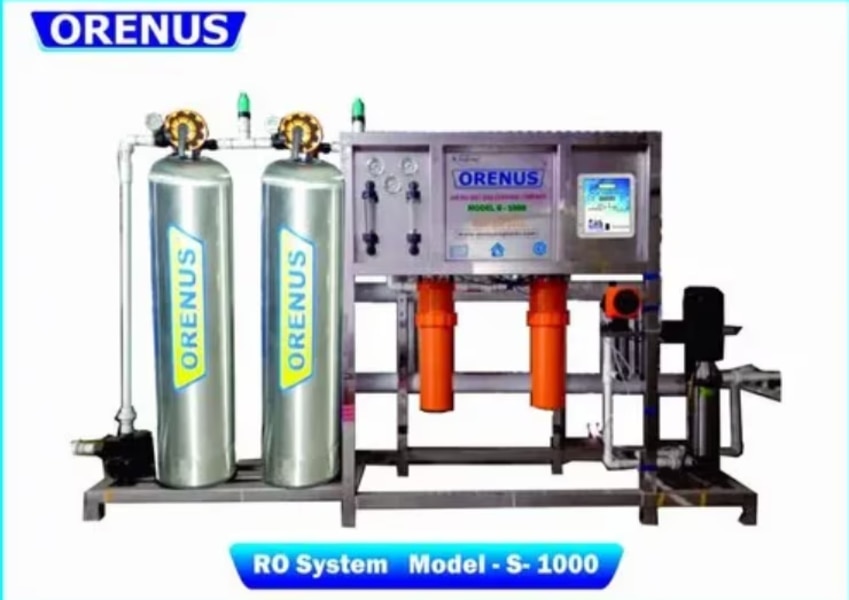
4. Assign a documented route for RO reject, filter backwash, membrane-cleaning water and initial flushing, subject to site consent conditions. Check plastic-packaging extended-producer-responsibility duties, pest-control records, stock rotation and expiry dates. Compare Orenus Water age technology with alternatives on maintenance scope, measured-site performance, training and response evidence—not catalogue capacity.
Related products
 | Mineral Water Plant Packaged Drinking Water Bottle Plant Filling Capacity 10 Bottle/min Water Purification Process RO Automation Grade Semi-Automatic Country of Origin Made in India Container Type Pouch For... View product → |
 | Mineral Water Plant Capacity 200 BPM Power Consumption 2 hp Bottle Type plastic Usage/Application industrial Packaging machines are used to package products or... View product → |
Frequently asked questions
Which benefits appear when a packaged water plant runs consistently?
Stable rinsing, filling, capping, coding and labelling reduce rework, improve scheduling and make saleable output more predictable.
How do you calculate usable output instead of quoting rated capacity?
Multiply actual running hours by average production rate, then subtract rejected bottles, changeover losses, downtime and other non-saleable output.
How do Nagpur’s water and climate conditions affect daily operation?
Record source-water variation, ambient heat, humidity and storage conditions because they influence treatment settings, sanitation, condensation, labels and operator checks.
What quality and compliance evidence must exist for every released batch?
Keep traceable production records, source and treated-water test results, packaging checks, coding details, corrective actions and the authorised batch-release decision.
What support and performance controls protect benefits after launch?
Use preventive-maintenance schedules, calibration records, spare-parts planning, operator training, downtime logs and periodic reviews of yield, rejects and water quality.
Related products
 | Mineral Water Plant Filling Capacity 30 Bottle/min Type Of Machines Fully Automatic Laboratory Chemical Laboratory Customization Yes Driven Type Electric Voltage 380V... View product → |
 | Mineral Water Plant Filling Capacity 100 bottle/min Water Purification Process RO Automation Grade Automatic Water Filling Method Bottle Installation/Civil Work... View product → |
 | Mineral Water Plant Capacity 30 BPM Shape Rectangle Voltage 220 V Frequency 60 Hz A Turnkey Mineral Water Project refers to a comprehensive business setup in which a... View product → |
Keywords