Summer planning starts with dispatch demand, not a machine’s headline bottles-per-minute figure. You will learn how to convert your own sales records into production, storage, utility, compliance and acceptance requirements for a plant that can operate through Nagpur’s April-to-June conditions.
Key takeaways
- Size equipment from peak daily demand, not annual averages.
- Separate filler speed from saleable bottles after rejects and changeovers.
- Confirm the legal product category before specifying treatment equipment.
- Demand performance testing, records and commissioning before summer production.
Convert Nagpur summer sales into a production plan
Size a mineral water plant for summer demand from your highest credible daily requirement, not an annual average or the filler’s advertised rate. Use sales records, distributor commitments and previous April-to-June orders, then separate average-day demand from peak-day demand.
- For each SKU, calculate bottles per day as expected cases × bottles per case.
- Calculate litres per day as bottles per day × container volume.
- Calculate peak-hour demand from the dispatch window: peak-day bottles ÷ dispatch hours, not bottles ÷ 24.
- Calculate peak-shift bottles from the dispatch plan, then use: required bottles per shift = peak-shift bottles ÷ planned uptime.
- Set planned uptime after subtracting sanitation, product changeovers, maintenance, material shortages and expected rejects from scheduled shift hours.
- Calculate required litres per shift as bottles per shift × bottle volume.
- Set nominal production above saleable demand using an explicit efficiency assumption, such as 80% planned operating efficiency. Do not treat a 6,000-bottle-per-hour nameplate as guaranteed output.
- Add finished-goods safety stock for delivery lead time plus expected power or water interruptions.
- Calculate storage positions as cases per day × reserve days. Check that the warehouse protects PET bottles, labels and filled packs from direct sun and hot, unventilated sheds.
Model 1-litre PET, smaller bottles and 20-litre returnable jars separately. A automatic bottled water plant can have enough total litres while its jar washer, bottle blower, labeller or dispatch window remains the bottleneck. Use the resulting shift and storage figures to test the complete line, utilities and warehouse before approving capacity.
Design for Nagpur’s heat, water, power and delivery pattern
The summer design for an automatic mineral water plant in Nagpur must withstand April-to-June heat, variable source water, power interruptions and route delays. Use representative pre-monsoon and post-monsoon laboratory samples, then size treatment to the worse result for:
- Total dissolved solids, hardness, iron and manganese
- Nitrate, fluoride and microbiological quality
Do not use an annual average. Confirm the permitted borewell, municipal or other source and its daily availability before fixing production hours.
Compare mineral water plant production equipment in Nagpur against the entire delivery pattern, not only its nameplate speed.
| Operating factor | What to verify | Design consequence |
|---|---|---|
| Source | Permission and daily volume | Fix production hours and storage |
| Distribution | Distance, loading time, route frequency and vehicle capacity | Add warehouse reserve for longer routes |
| Power | Sanctioned load, voltage stability, backup generation and restart procedure | Include pumps, compressor, bottle blower, ozone, HVAC, lighting and chiller |
| Heat | Ventilation, condensation and PET storage temperature | Prevent deformation and protect product quality |
Protect raw and treated-water tanks, filled bottles and labels from sunlight. Do not store them in an unventilated metal shed.
Provide a permitted route for RO reject, filter backwash, membrane-cleaning water and jar-washing effluent. At 70% recovery, 10,000 litres per hour of permeate requires about 14,286 litres per hour of feed and produces about 4,286 litres per hour of reject. More RO capacity without reject management can stop production.
Reconcile filler speed with real saleable output
A quoted 100 bottles per minute equals 6,000 bottles per hour only for the stated bottle size and defined operating conditions. It does not reconcile with purification rated at 1,000 litres per hour until you know bottle volume, operating hours, uptime and whether each figure describes a different process stage.
Request a complete mass-balance and line-capacity sheet before comparing an automatic mineral water plant in Nagpur or any automatic bottled water plant.
| Nominal figure | What it proves | What it does not prove |
|---|---|---|
| 100 bottles/minute | 6,000 bottles/hour at the quoted SKU | Saleable output after stoppages, rejects and changeovers |
| 1,000 litres/hour | Treatment-stage flow | Filler capacity or finished-water availability |
| Saleable bottles/shift | Dispatchable production after losses | Capacity for another bottle, jar or pouch |
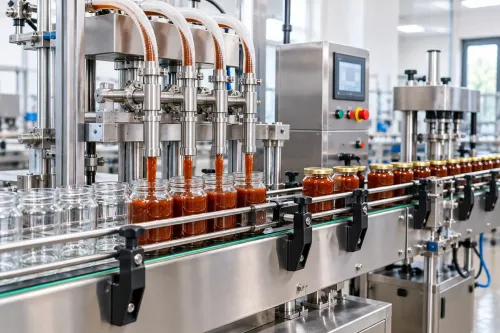
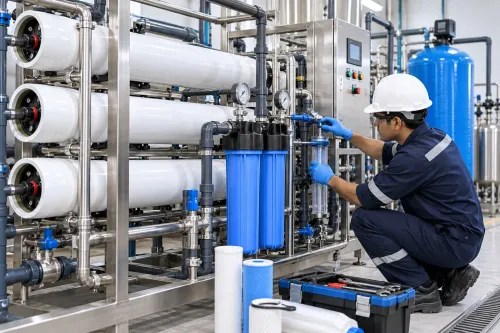
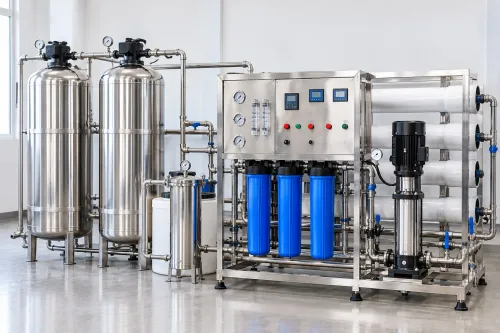
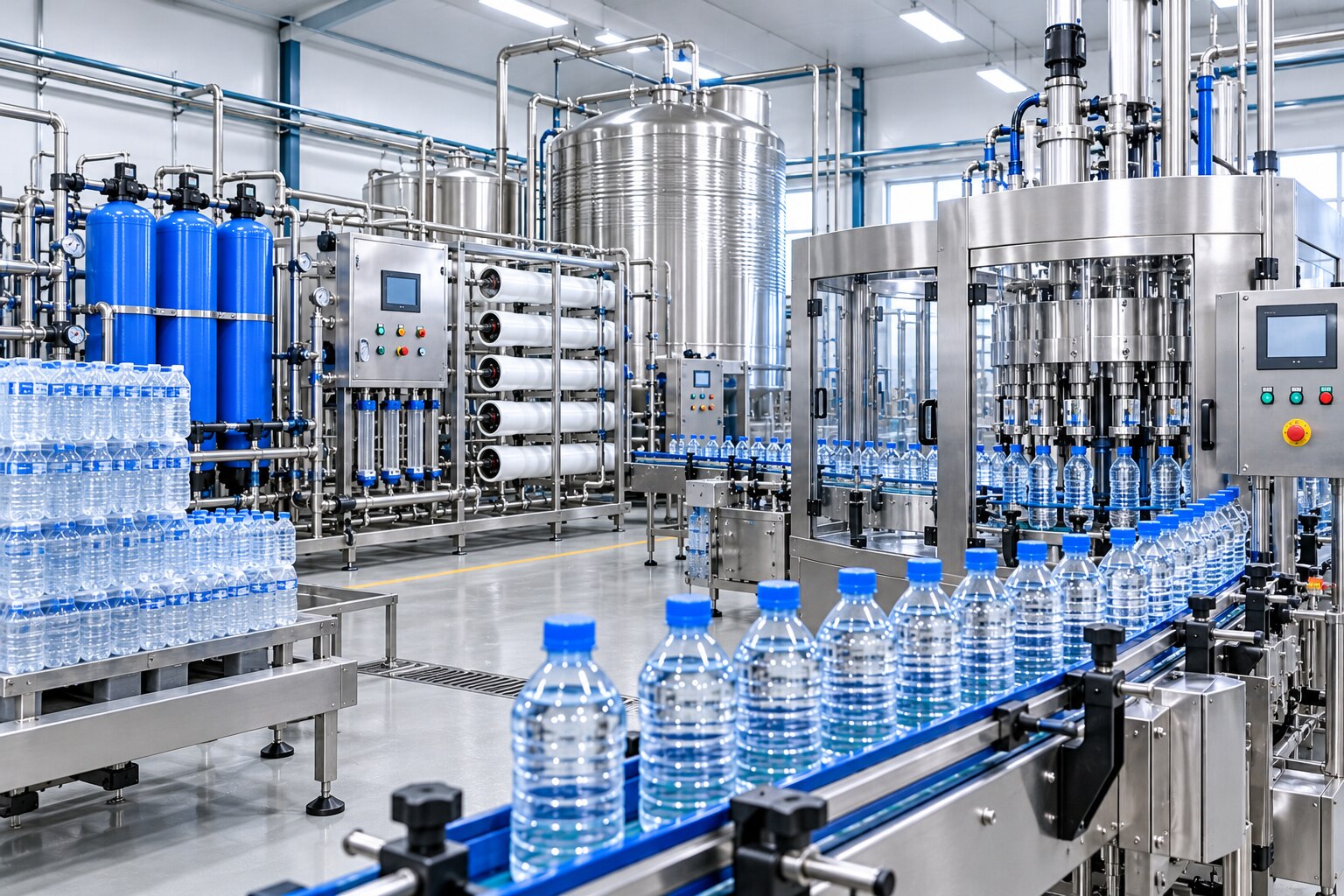
Ask for rated and guaranteed flow for every SKU, planned efficiency, changeover and sanitation duration, reject allowance, maintenance downtime and available storage volume. Trace raw-water tank, dosing or oxidation, multimedia or pressure-sand filter, activated carbon, cartridge filter, RO, remineralisation or blending, UV or ozone, hygienic product tank, rinsing, filling, capping, labelling, coding and secondary packing.
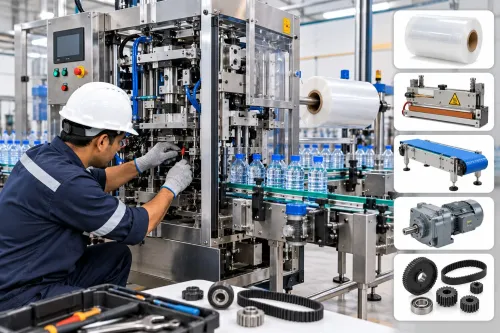
Confirm bottle blowing or purchased bottles, jar or pouch handling, rinser heads, cap feeder, labeller, coder, shrink wrapper, conveyors, compressor, ozone generator, tanks, pumps, CIP provisions and electrical panel. For 20-litre jars, include washing, detergent control, rinsing and rejection for cracks, cloudiness, odour, damaged necks or tampered caps.
Calculate saleable bottles per shift after every loss, then compare it with peak-hour dispatch.
Choose the legal product and build the treatment record around it
RO treatment alone does not make water legally marketable. For an automatic mineral water plant in Nagpur, first classify the product.
| Product | Legal basis | What the process must support |
|---|---|---|
| Packaged drinking water | Treated permitted source; verify current FSSAI licence, testing scheme and BIS position, commonly IS 14543 | RO, controlled remineralisation or blending, disinfection and compliant packaging |
| Natural mineral water | Protected underground source with characteristic mineral composition; check separate requirements commonly identified as IS 13428 | Source protection and consistent natural mineral profile |
Treated borewell or municipal water does not become natural mineral water because minerals are added after RO.
Confirm the position at purchase date; reject quotations that say only “BIS approved plant.” For a mineral water plant for summer demand, check Legal Metrology declarations for net quantity, manufacturer or packer details, date marking, MRP and consumer-care information.
Obtain source-water permissions, groundwater approval where applicable, wastewater consent and local environmental permissions before commissioning. Design remineralisation from measured calcium, magnesium, bicarbonate, conductivity, pH and alkalinity. An unspecified mineral dose creates scaling, taste variation and a product composition that may not match the label.
Build the treatment record around each batch. Record:
- Source-water results and treatment-batch number
- Final-water chemistry and microbiology
- UV intensity or lamp status
- Ozone generation, contact conditions or residual
- Sanitation, rejects and corrective actions
UV depends on dose, flow, transmittance and lamp condition. Ozone depends on concentration, contact time, mixing, temperature and residual; neither device alone proves microbiological safety.
Specify the purchase scope and prove performance before summer
1. Approve an automatic bottled water plant only against a signed scope. List included and excluded items: source-water tanks, pumps, dosing, filters, RO, remineralisation, UV or ozone, product tanks, rinser, filler, capper, labeller, coder, conveyors, packing, CIP, compressor, electrical panel, utilities, civil work and controls.
Require the P&ID, equipment list, electrical-load schedule, air and water consumption, RO recovery, reject route, tank volumes, CIP method, sanitation procedure and spare-parts list.
2. Match every package to the capacity model. Ask whether bottle blowing, preforms, purchased bottles, 20-litre jars and pouches are separate packages, and request rated and guaranteed output for each pack size. Jar production requires washing, inspection and rejection; PET requires blowing or bottle supply, rinsing, filling, capping and packing.
Compare mineral water production equipment in Nagpur by saleable output and support responsibility, not the phrase “automatic mineral water plant.” Orenus Water age technology is useful when it turns your demand model into this complete scope rather than quoting only a filler or RO skid.
3. Commission with the intended source water, every major pack size, the planned shift duration and the actual sanitation cycle. Record treated-water flow, RO recovery, conductivity, pH, ozone or UV data, filler speed, rejects, changeover time, compressed-air pressure, electrical demand and microbiological results. A no-load demonstration proves that motors run, not dispatch capacity.
Accept the line only when saleable output, utilities, records and compliance documents meet the summer plan.
Related products
 | Mineral Water Plant Filling Capacity 100 bottle/min Water Purification Process RO Automation Grade Automatic Water Filling Method Bottle Installation/Civil Work... View product → |
 | Mineral Water Plant Filling Capacity 30 Bottle/min Type Of Machines Fully Automatic Laboratory Chemical Laboratory Customization Yes Driven Type Electric Voltage 380V... View product → |
Frequently asked questions
How do you size a mineral water plant for Nagpur’s summer demand?
Use the highest credible daily requirement from sales records, distributor commitments and April-to-June orders. Separate average-day demand from peak-day demand, then allow for rejects, cleaning, changeovers and downtime.
What conditions should you account for when designing a plant in Nagpur?
Assess summer heat, raw-water quality, power reliability, storage capacity and delivery routes. These factors affect treatment performance, product holding time, cooling, backup power and dispatch planning.
Why is filler speed different from saleable output?
Advertised filler speed excludes container rejection, cap and label problems, sanitation, format changes, operator breaks and stoppages. Calculate saleable output after these losses and compare it with peak demand.
What legal product decision affects mineral water plant design?
First identify whether you will produce packaged drinking water or natural mineral water. The category determines the treatment approach, testing, records, labelling and licence documents you must prepare.
What should you include in a mineral water plant purchase scope?
Specify treatment stages, tanks, pumps, bottling and packaging equipment, utilities, controls, documentation, training, spare parts and acceptance tests. Require performance proof under conditions that match your planned summer operation.
Keywords