The investment only makes sense when your source, legal product category, saleable output, and route to market support the installed cost. By the end, you will be able to test the water source, compare delivery models, calculate realistic output, and judge whether a complete plant can earn an acceptable return.
Key takeaways
- Confirm source rights, sustainable yield, seasonal drawdown, and abstraction limits.
- Verify the licence and standards required for your chosen water product.
- Size the complete plant around saleable output, not installed capacity.
- Compare turnkey investment with contract packing and targeted line upgrades.
Start with the source, product category, and demand
A turnkey mineral water project becomes commercially viable when a secure source, a legally saleable product, and repeat demand support the plant’s saleable operating rate. A protected borehole is not enough: confirm source rights, sustainable yield, seasonal drawdown, sanitary protection, abstraction limits, and permitted operating hours before sizing equipment.
For a mineral water project for beverage producers, define the product category before choosing treatment. Natural mineral water requires a qualifying underground source and a stable mineral composition; reverse osmosis, ultraviolet treatment, or ozonation can change the product into treated or purified drinking water under the applicable rules.
A generic RO-and-filler package cannot create a valid natural-mineral-water claim.
The project passes an early commercial screen when these conditions are documented:
- Source approval and hydrogeology support the planned daily volume, not just a short pump-test result.
- Product specifications remain stable across seasons and match the intended label category.
- Packaging demand is contracted or reliably forecast before construction.
- The line can run near its designed saleable utilization after allowing for changeovers, sanitation, rejects, maintenance, and downtime.
- The owned plant beats contract packing or external filling after adding staffing, laboratory work, utilities, maintenance, compliance, inventory, and distribution costs.
A lower cost per bottle does not prove that a turnkey mineral water project worth it. Compare the full cost and risk of ownership with contract packing and treated bulk-water supply; ownership wins when stable volume and source control offset the capital and operating obligations.
Confirm what product you are legally equipped to sell
The source, not the filler, decides whether you can sell natural mineral water. In the European Union, natural mineral water must come from an underground source, be microbiologically wholesome at source, and have a characteristic mineral composition that remains stable. Disinfection is generally prohibited; only narrowly defined treatments are allowed.
Before approving a turnkey mineral water plant project, obtain evidence for:
- An approved borehole or spring and its sanitary protection zone
- Hydrogeological data showing sustainable yield and seasonal drawdown
- An abstraction permit covering volume and operating hours
- Laboratory results proving source microbiology and mineral composition
A short pump test does not prove that the borehole can supply a lawful production rate throughout the year. Source protection, recharge, and environmental limits matter as much as the pump’s peak output.
Reverse osmosis can remove much of the dissolved mineral profile, so it usually supports purified or treated drinking water rather than a natural-mineral-water claim. Ultraviolet or ozone treatment can create the same regulatory problem when the category prohibits disinfection.
Confirm the permitted treatment and label category with the authority in your target market before ordering equipment.
If the source cannot support the natural-mineral definition, design and market the product as packaged drinking water instead. That category can permit treatment such as filtration, reverse osmosis, and disinfection, subject to local food-safety, labelling, and water-quality rules. Your equipment, approvals, label, and sales claim must describe the same product.
Define the complete plant around saleable output
A plant is complete only when its approved source can become compliant, saleable bottles at the planned rate. The complete mineral water plant setup starts with sustainable borehole yield, seasonal drawdown, source-water testing and abstraction limits; a short pump test does not prove a legally sustainable production rate.
- Source development, hydrogeology, permits, sanitary protection, raw-water tanks and product-water tanks.
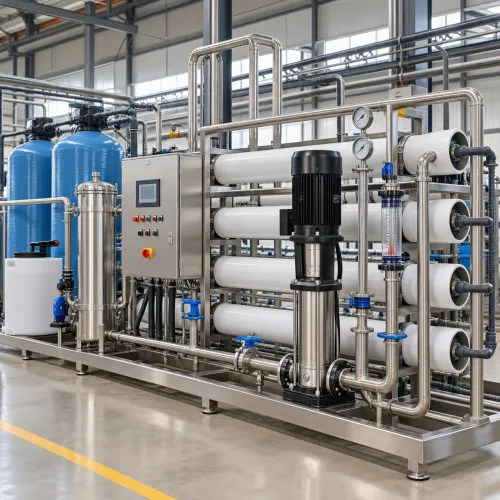
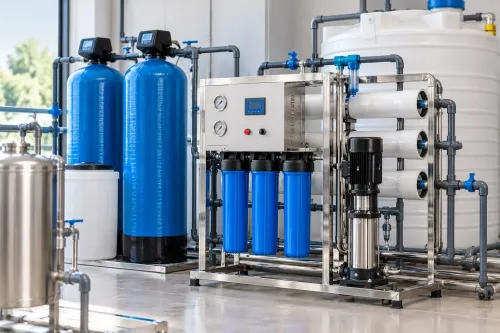
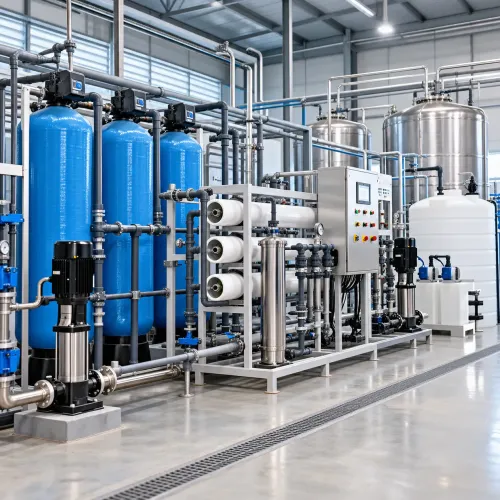
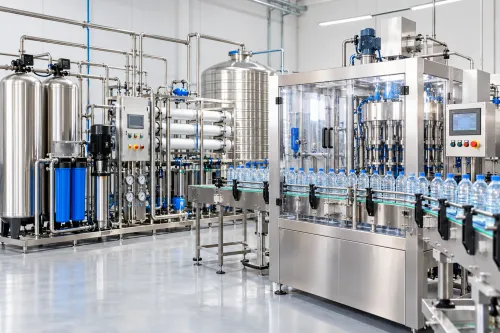
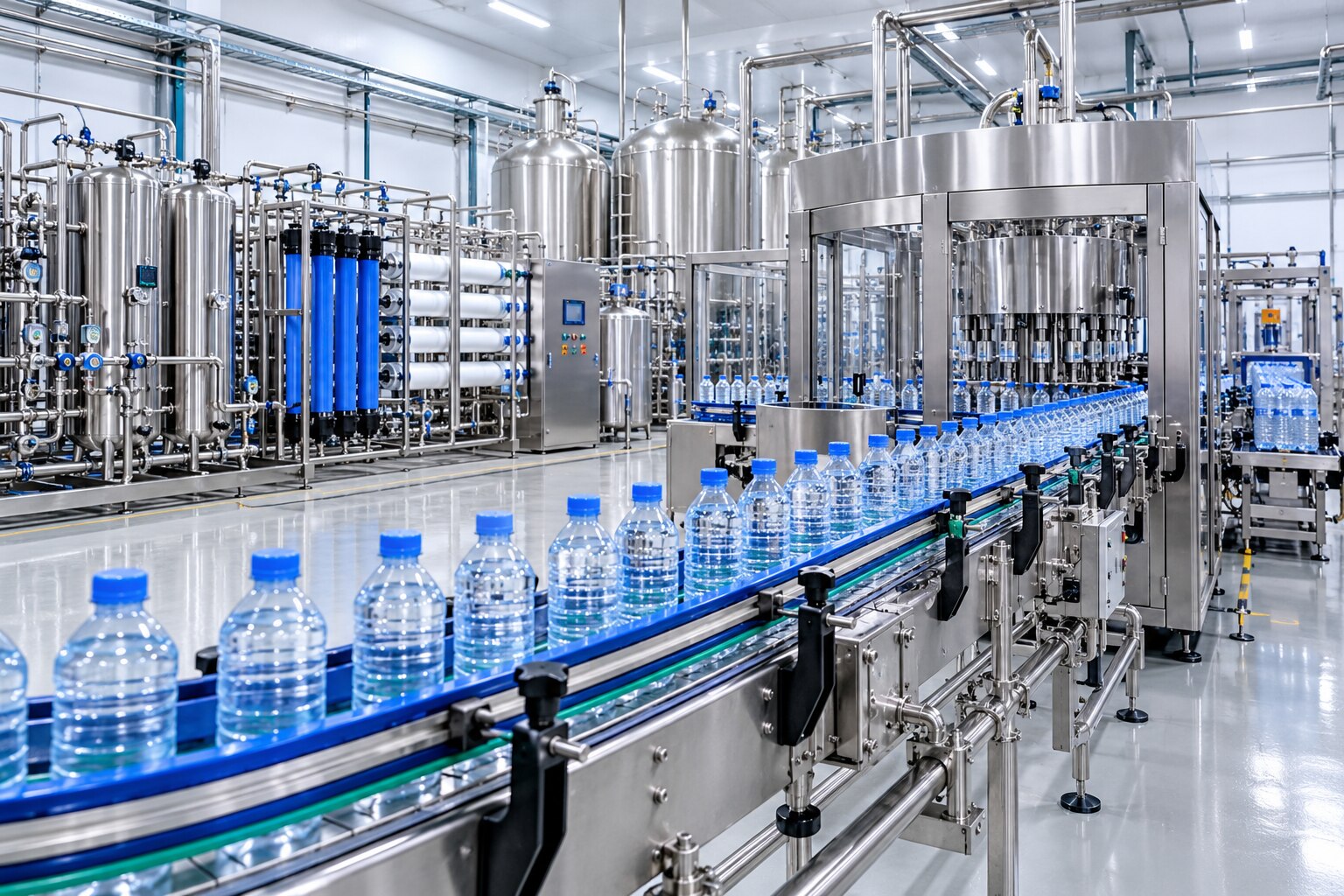
- Pretreatment, filtration, reverse osmosis where legally suitable, remineralisation, UV or ozone disinfection, and CIP facilities.
- Bottle rinsing, filling, capping, labelling, date and batch coding, secondary packaging, conveyors and finished-goods handling.
- Laboratory equipment, utilities, drainage, electrical systems, compressed air, staff facilities, approvals, validation and commissioning.
Treatment technology also determines the product claim. Reverse osmosis, ultraviolet treatment or ozonation can produce treated drinking water, but they may not support a natural-mineral-water label where regulations require underground origin, characteristic composition and restricted treatment.
Calculate capacity as saleable litres, not filler speed. A filler rated at 120 bottles per minute with 500 ml bottles represents 60 litres per minute before downtime, changeovers and rejects. Subtract pretreatment losses, membrane reject, filter backwash, CIP water, start-up flushing, laboratory samples, line rejects, and water retained in tanks and piping.
Then apply the planned operating hours and realistic line utilisation. The result is the volume you can sell, while source yield sets the hard ceiling. A line that outpaces its permitted source is expensive idle capacity.
Compare the investment with contract packing and line upgrades
Calculate payback from saleable cases, not the filler’s rated bottles per minute. Subtract packaging, treatment chemicals, energy, labour, maintenance, laboratory testing, rejects, distribution, financing, and working capital from net sales, then divide the turnkey water plant investment by annual contribution after fixed costs.
| Option | Cost profile | Main risk |
|---|---|---|
| Contract packing | Low capital; pay per packed case | Supplier capacity, margin, quality control, and contract dependence |
| Treated bulk water plus external filling | Moderate capital; separate water and filling charges | Transport, custody, microbial control, and incompatible specifications |
| Existing-line upgrade | Lower capital when utilities and space exist | Integration downtime, limited speed, and obsolete equipment |
| Owned turnkey plant | Highest capital; lower unit cost at stable utilization | Source permits, yield, food safety, staffing, maintenance, and demand |
Model the mineral water project for beverage producers across conservative, base, and peak cases. Change utilization, SKU changeovers, seasonal demand, source yield, bottle or preform prices, electricity tariffs, reject rates, ramp-up time, and loan interest; a high-speed line running one shift can lose to a slower line matched to contracted orders.
Include land, civil works, source development, approvals, laboratory setup, utilities, inventory, and commissioning in the investment. Treat a borehole pump test as insufficient evidence until sustainable yield, seasonal drawdown, sanitary protection, and abstraction limits are documented.
Owning the plant is worth considering when demand is contracted, the source is secure, and saleable utilization stays high; otherwise contract packing preserves cash and limits operating risk.
Make the supplier contract prove the business case
Require a signed, testable offer before treating the turnkey water plant investment as viable. The contract must connect source yield to saleable bottles, not merely promise equipment delivery. Make the supplier price the same product, volume, shifts, labour, utilities, packaging and maintenance assumptions used in your model.
1. Define the legal product and source limits: permitted treatment, abstraction rate, seasonal yield, source-protection duties, approvals, and the consequence if testing shows the water cannot support a natural-mineral-water claim.
2. Attach a battery-limit schedule. Name who supplies treated feedwater, tanks, power, compressed air, HVAC, drainage, hot water or steam, refrigeration, wastewater handling, laboratory equipment, civil works and approvals; list every excluded connection and cost.
3. Set acceptance tests for hourly saleable output, fill-volume accuracy, reject rate, water quality, microbiological controls, cleaning validation, changeover time and utility consumption. Tie final payment to witnessed results at your specified bottle, cap and label.
4. Require a five-year total-cost schedule covering operators, chemicals, filters, bottles or preforms, energy, laboratory tests, servicing, spares and downtime, plus warranty response times and training.
5. Ask for comparable quotes for contract packing, treated bulk water with external filling, and the owned line, using identical demand and utilization assumptions. A low bottle cost proves nothing if the line runs below saleable capacity.
For a turnkey mineral water plant project, ask Orenus Water age technology to state these boundaries and acceptance measures in the quotation, not in a sales presentation.
Related products
 | Mineral Water Plant Capacity 30 BPM Shape Rectangle Voltage 220 V Frequency 60 Hz A Turnkey Mineral Water Project refers to a comprehensive business setup in which a... View product → |
 | Mineral Water Plant Filling Capacity 30 Bottle/min Type Of Machines Fully Automatic Laboratory Chemical Laboratory Customization Yes Driven Type Electric Voltage 380V... View product → |
Frequently asked questions
What should beverage producers confirm before sizing a turnkey mineral water project?
Confirm source rights, sustainable yield, seasonal drawdown, sanitary protection, abstraction limits, and permitted operating hours.
How do you know which bottled water product you can legally sell?
Match the source, treatment process, label claims, testing records, and required licence to the product category you plan to market.
What should a complete mineral water plant setup be sized around?
Size treatment, storage, filling, packaging, utilities, and quality-control capacity around saleable operating output and expected demand.
How should you compare a turnkey plant investment with contract packing?
Compare total installed cost, utilisation, working capital, quality control, logistics, minimum order quantities, and the time required to reach market.
Related products
 | Mineral Water Plant Filling Capacity 100 bottle/min Water Purification Process RO Automation Grade Automatic Water Filling Method Bottle Installation/Civil Work... View product → |
 | Mineral Water Plant Packaged Drinking Water Bottle Plant Filling Capacity 10 Bottle/min Water Purification Process RO Automation Grade Semi-Automatic Country of Origin Made in India Container Type Pouch For... View product → |
 | Mineral Water Plant Capacity 200 BPM Power Consumption 2 hp Bottle Type plastic Usage/Application industrial Packaging machines are used to package products or... View product → |
 | Mineral Water Plant RO Capacity(Litre/Hr) 1000 LPH Material FRP Automation Grade Semi Automatic RO Membrane Type Thin-Flim Composite (TFC) Media Activated Carbon + sand... View product → |
Keywords