Water purification failures usually begin before water reaches the RO membrane: poor screening, uncontrolled hardness, oxidants, fouling, or a treatment target that was never defined. By the end, you will be able to map the treatment process, specify the feed-water tests, identify likely causes from operating data, and judge whether a proposed plant is configured for your actual use.
Key takeaways
- Keep RO feed below 1 NTU and SDI15 below 5.
- Use feed-water analysis to select membranes, pretreatment, and recovery.
- Check pretreatment pressure drop before blaming the RO membranes.
- Verify permeate flow, conductivity, recovery, and rejection during commissioning.
What happens at each stage of the RO plant process?
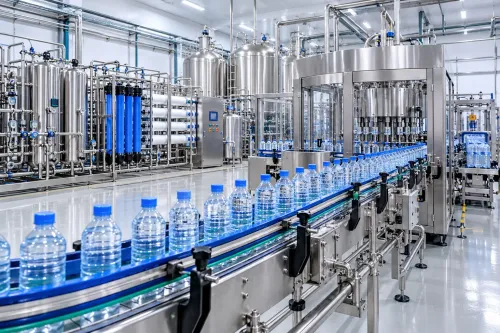
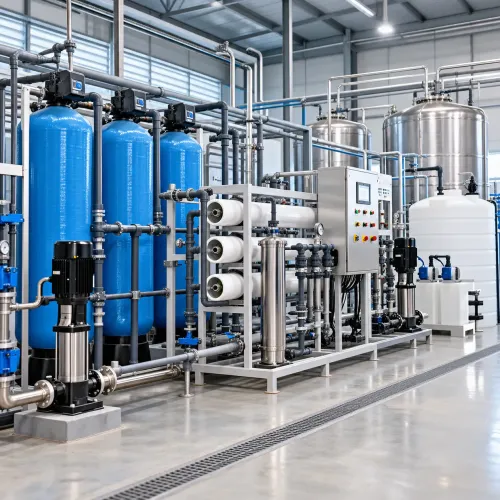
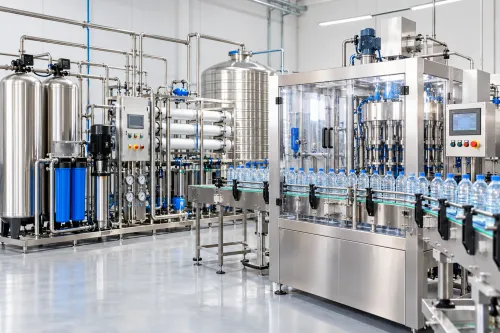
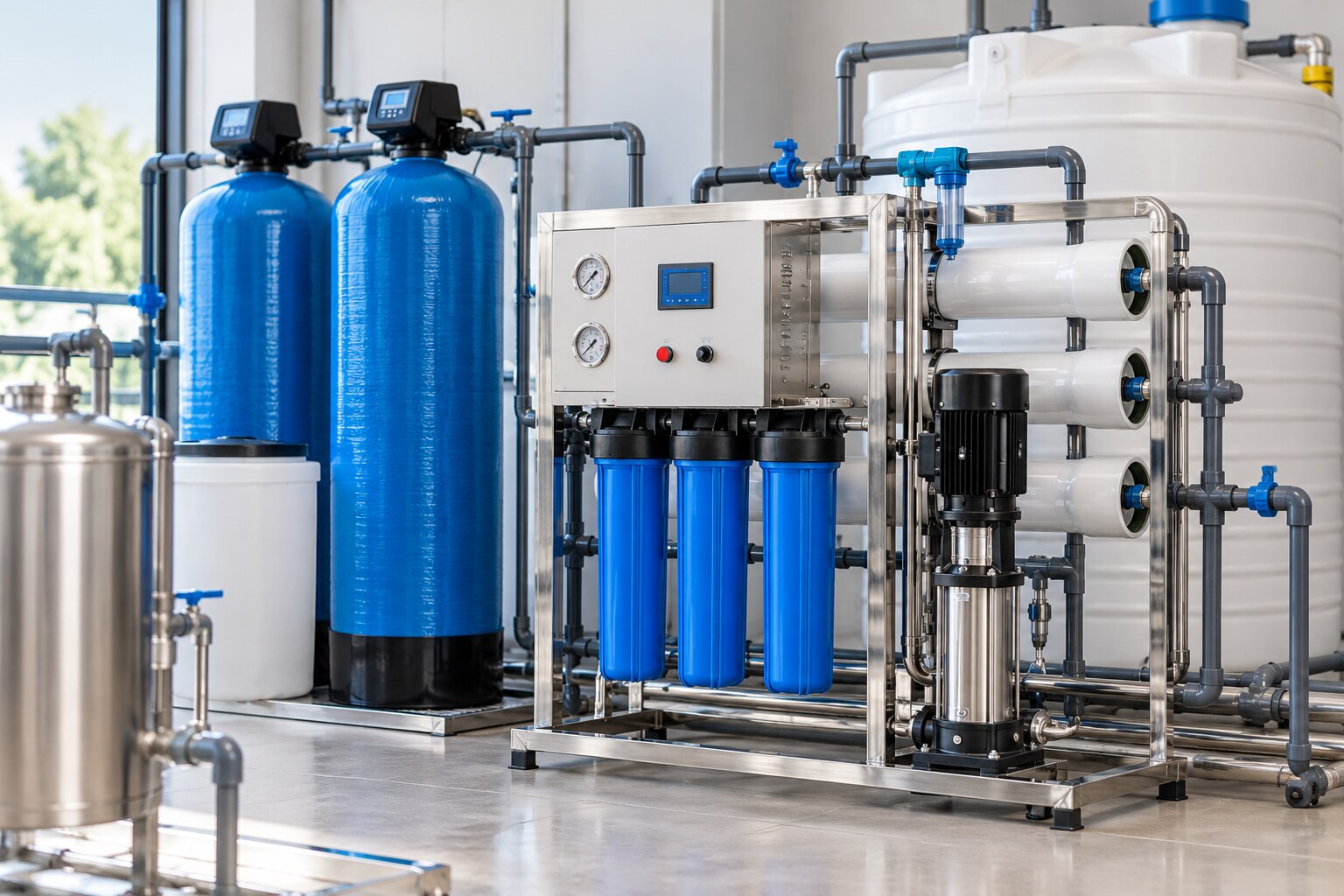
Feed-water screening removes leaves, grit, and other large debris before raw-water pumping sends the supply into treatment. The orenus ro plant process then uses multimedia or sand filtration to reduce suspended solids and turbidity; a feed target below 1 NTU and SDI15 below 5 limits colloidal fouling.
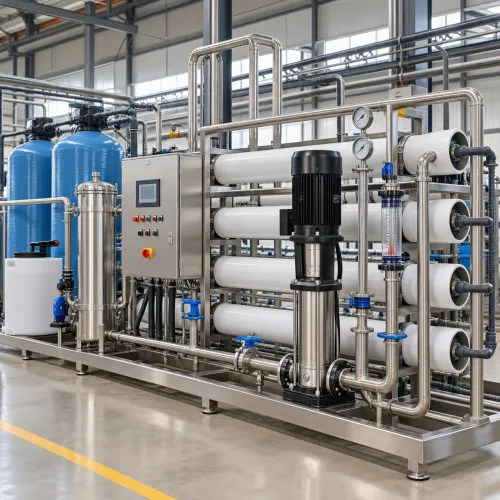
Activated-carbon treatment removes chlorine and some organic compounds that could oxidise or foul thin-film composite membranes. Cartridge filtration catches finer particles before high-pressure pumping raises the feed to the pressure required for membrane separation.
| Stage | Main purpose | What it removes or controls |
|---|---|---|
| Screening | Protect pumps and valves | Leaves, grit, and large debris |
| Multimedia or sand filter | Clarify feed water | Suspended solids and turbidity |
| Activated carbon | Protect membranes | Free chlorine and some organics |
| Cartridge filter | Final particulate barrier | Fine particles |
| RO membrane | Separate dissolved contaminants | Salts, hardness ions, nitrate, fluoride, and many microorganisms |
| Permeate tank and pipework | Hold and distribute product water | Requires hygienic design and disinfection |
RO permeate flows to storage while concentrate goes to drain, recovery, or an approved reject-treatment system. Final disinfection is required when the application demands microbiological control.
RO is not a complete barrier: carbon dioxide passes readily, boron rejection depends on pH and membrane type, and oil, heavy biological loads, and scale-forming compounds require pretreatment or polishing. Low conductivity does not prove microbiological safety; tanks and pipework can develop biofilm after the membrane.
Which feed-water results determine the plant configuration?
Plant configuration follows the laboratory report, not nominal capacity. A conductivity reading alone cannot predict scaling, fouling, or cleaning frequency, so request these results before selecting membranes, pretreatment, recovery, or chemical dosing:
- TDS and conductivity; temperature and pH
- Turbidity and SDI15
- Hardness, alkalinity, silica, sulfate, iron, and manganese
- Nitrate, fluoride, free chlorine, and oil
- Microbiological counts
Turbidity below 1 NTU and SDI15 below 5 reduce colloidal-fouling risk. Higher results point to stronger clarification, filtration, or source-water control before the membrane vessels. Check the membrane datasheet for the actual limits for free chlorine, pH, temperature, pressure, and chemical exposure; do not substitute a generic RO rule for those figures.
Raw-water results must be compared with the required treated-water quality, not with a generic “RO water” label.
| Application | Permeate specification to define | Design consequence |
|---|---|---|
| Boiler | Conductivity, silica, alkalinity, and hardness limits | Possible second-pass RO, degasification, or polishing |
| Cooling system | Conductivity, hardness, silica, and concentration-cycle limit | Recovery and scale control govern the design |
| Manufacturing line | Process-specific ions, TDS, and microbiological limits | Pretreatment and final disinfection follow the process |
| Laboratory | Method-specific ionic and microbiological limits | Stable conductivity and polishing may be necessary |
| Drinking water | TDS, microbiological, and regulatory limits | Storage, pipework, and disinfection require hygienic control |
A 65–70 percent recovery is a design value, not a universal operating target. The correct figure depends on membrane arrangement, feed chemistry, antiscalant performance, concentrate limits, and reject-disposal options. These checks expose RO plant water quality problems before equipment is purchased.
How do you diagnose falling flow, rising TDS, and unstable conductivity?
Start with instruments and operating conditions, not membrane replacement. In commercial RO plant troubleshooting, compare normalized permeate flow and normalized salt passage against the commissioning baseline.
1. Record feed, permeate, and concentrate flow; feed, permeate, and concentrate conductivity; temperature; feed and concentrate pressure; pressure drop across each membrane stage; and cartridge-filter differential pressure.
2. Calculate recovery as: permeate flow ÷ feed flow × 100. Calculate salt rejection as: (1 − permeate conductivity ÷ feed conductivity) × 100.
3. Correct raw flow and conductivity for temperature and pressure before judging performance. A cold feed produces less permeate, while changed pressure alters flow and salt passage; raw readings can therefore make a healthy plant look faulty.
4. Trend normalized permeate flow first. A falling value points toward fouling, scaling, compaction, low feed pressure, or restricted pretreatment. Check cartridge differential pressure, stage pressure drop, pump pressure, and recent feed-water changes before cleaning or replacing elements.
5. Trend normalized salt passage next. A rising value indicates oxidation, membrane damage, seal or O-ring leakage, interconnector bypass, or excessive compaction.
A sudden conductivity jump requires pressure-vessel and element testing, including element-by-element probing where available. A gradual drift points toward progressive fouling, scale, compaction, or chemical damage. Test the vessel seals and interconnectors before condemning the whole membrane set.
What pretreatment failures damage RO performance, and how should you respond?
A chlorine residual at the membrane inlet can oxidize a thin-film composite membrane and progressively reduce salt rejection. Check activated-carbon performance or sodium bisulfite dosing, then verify residual oxidant at the inlet rather than relying on the dosing-setpoint display.
Hardness and silica become concentrated at high recovery and form scale. Iron, manganese, silt, oil, and biological growth foul the surface or increase pressure drop. For ro plant water quality problems, use this commercial RO plant troubleshooting sequence:
- Inspect the raw-water pump, chemical dosing system, multimedia-filter valves, carbon vessel, cartridge condition, seals, and recent source-water changes.
- Record SDI, chlorine residual, feed and concentrate pressure, pressure drop across each stage, and feed, permeate, and concentrate flow. Confirm that pressure gauges and flow meters read plausibly.
- Compare normalized permeate flow and normalized salt passage with the established baseline. Start cleaning after roughly a 10–15 percent normalized-flow decline, a comparable salt-passage increase, or significant pressure-drop growth, subject to the membrane maker’s criteria.
- Use acid cleaning for carbonate or metal-oxide scale. Use an alkaline cleaner with surfactant for organic, colloidal, or biological fouling; acid applied first to heavy biological deposits can make removal harder.
Follow the membrane datasheet for cleaning sequence, pH, temperature, contact time, and chemical compatibility. Incompatible chemistry can permanently damage the membrane, while replacing elements before correcting pretreatment only repeats the failure.
How should you specify and verify an Orenus RO plant for a real application?
Buy the plant against measured feed-water conditions, not nominal litres per hour. For an orenus ro for plant purification problems specification, require a feed-water analysis, membrane projection, pretreatment design, recovery basis, reject-disposal plan, and application-specific permeate target. Orenus Water age technology can be evaluated against this evidence in the same way as any supplier.
Your purchase specification should state:
- Feed flow, chemistry, temperature, pH, chlorine, SDI15, and permeate flow
- Design recovery, normalized permeate conductivity or salt rejection, and pressure drop across each membrane stage
- Cartridge-filter differential-pressure limit and the exact membrane limits for chlorine, SDI15, pH, and temperature
- Pretreatment duties, storage-tank volume, pipework hygiene, and disinfection arrangements
- Concentrate flow, reject-disposal route, and the water-quality requirement for the boiler, cooling system, production line, laboratory, or drinking-water use
Write the acceptance test before signing the order. Define calibration records for conductivity, pressure, flow, temperature, and pH instruments; feed conditions; start-up stabilisation time; permeate flow; recovery; normalized conductivity or salt rejection; allowable pressure drops; and the duration of stable operation.
A plant that reaches its flow target at excessive recovery or poor rejection has not passed. If carbon dioxide, boron, alkalinity, or very low conductivity remains outside specification, compare a second RO pass, degasification, ion exchange, polishing, or separate disinfection system before accepting the design.
Related products
 | RO Water Plant Capacity 500 -10000 Material Stainless Steel Technology Japanese Brand ORENUS RO Capacity(Litre/Hr) 3000 LPH Usage/Application Water Purification... View product → |
 | Mineral Water Plant RO Capacity(Litre/Hr) 1000 LPH Material FRP Automation Grade Semi Automatic RO Membrane Type Thin-Flim Composite (TFC) Media Activated Carbon + sand... View product → |
Frequently asked questions
What happens at each stage of the RO plant process?
Screening removes debris, pumping moves feed water, multimedia or sand filtration reduces solids, cartridge filtration protects the membranes, and reverse osmosis removes dissolved salts before post-treatment and storage.
Which feed-water results determine the plant configuration?
A complete analysis of TDS, conductivity, hardness, alkalinity, silica, iron, manganese, turbidity, SDI15, pH, temperature, microbiology, and seasonal variation determines pretreatment, membrane selection, recovery, and dosing.
How do you diagnose falling flow, rising TDS, and unstable conductivity?
Compare normalised permeate flow, feed and concentrate pressure, temperature, recovery, conductivity, and rejection. Falling flow points to fouling, scaling, low pressure, or cold water; rising TDS points to damaged membranes, leaks, scaling, or poor sealing.
What pretreatment failures damage RO performance?
A blocked filter, exhausted softener, incorrect antiscalant dose, chlorine breakthrough, high SDI, or uncontrolled pH can foul, scale, or oxidise membranes. Correct the pretreatment fault before replacing elements.
How should you specify and verify an Orenus RO plant for a real application?
Provide feed analysis, required permeate flow and quality, operating hours, recovery target, water temperature, storage needs, and discharge limits. Verify design calculations, instruments, alarms, materials, commissioning data, and acceptance results.
Related products
 | RO Water Plant RO Capacity 500-1000 (Liter/hour) Material Stainless Steel Automation Grade Automatic Usage/Application Industrial Max Water Recovery Rate 65-70 %... View product → |
 | Mineral Water Plant Material Stainless Steel Working Pressure 100 PSI RO Capacity 3000 ltr/hr Deliver Type Pan India Installation Service Yes Country of Origin Made in... View product → |
Keywords