Missed fills, leaking caps, conveyor jams, electrical trips, and declining RO performance do not all point to a failed packaging machine. By separating treatment, container, mechanical, pneumatic, electrical, and control faults, you can decide what to stop, what to measure, what to repair, and when a replacement line makes better commercial sense.
Key takeaways
- Shut down for contamination, injury risk, unverified packs, or uncontrolled electrical faults.
- Check treatment quality before adjusting fillers, caps, or conveyor settings.
- Specify container, output, utilities, automation, and service access—not bottles per minute alone.
- Replace the line when repeated failures threaten safety, output, or product compliance.
Which water packaging machine faults require an immediate shutdown?
Stop the line immediately when a fault can contaminate water, injure staff, or produce unverified packs. Common water packaging machine problems in Nagpur include voltage trips, sensor errors, pump failure, cap leakage, uneven fills, and conveyor jams; a visible alarm alone does not prove that production is safe.
Use this decision check before restarting:
- Is the filler bowl, nozzle, hose, or jar-washer section dirty, cracked, stagnant, or impossible to sanitize? Stop and quarantine affected product.
- Are bottles repeatedly underfilled, caps loose, seals leaking, or rejects increasing? Stop; do not sell packs made since the last verified check.
- Is a motor overheating, wiring exposed, insulation damaged, or a burning smell present? Isolate power and call a qualified technician.
- Has an emergency-stop circuit, guard switch, door interlock, or safety relay failed? Keep the machine locked out.
- For a single sensor alarm, bottle tip, or conveyor jam, stop, remove the obstruction safely, inspect alignment, and run a controlled test.
| Fault | Production decision | Evidence required before restart |
|---|---|---|
| Contaminated contact surface | Stop immediately | Cleaning, sanitizing, and product verification |
| Repeated fill or cap failure | Stop immediately | Corrected settings and measured sample checks |
| One isolated jam | Resume after correction | Guarded test run with no repeat |
| Electrical trip | Stop if repeated or accompanied by heat | Insulation, overload, and control-panel checks |
How should you troubleshoot treatment, filling, capping, and electrical faults?
Start with the product and utilities, not the filler. This sequence separates a machine fault from water, container, air, power, or operating errors:
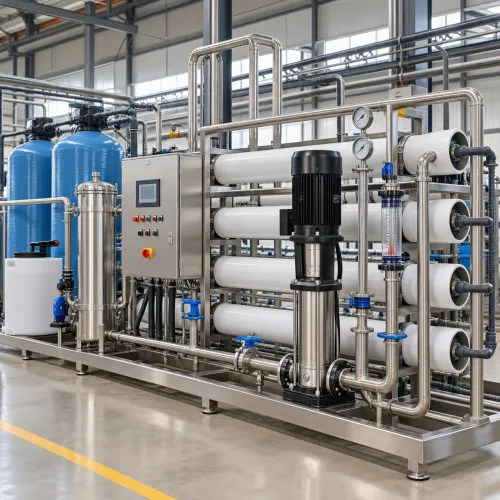
1. Confirm the treated-water result against the release specification: conductivity, turbidity, disinfectant residual, and microbiological status. Check tank level, inlet pressure, cartridge-filter differential pressure, and recent treatment alarms; poor water quality is not a filling-machine failure.
2. Check utilities at the machine while it runs. Record supply voltage, phase loss, compressed-air pressure, and air-filter condition. A voltage trip or low air pressure can stop valves and cylinders without a failed controller.
3. Inspect containers and closures. Compare bottle neck finish, jar roundness, cap dimensions, and bottle condition with the approved drawings. Oval containers, deformed PET, or inconsistent caps cause jams, low fills, tilted caps, and leaks.
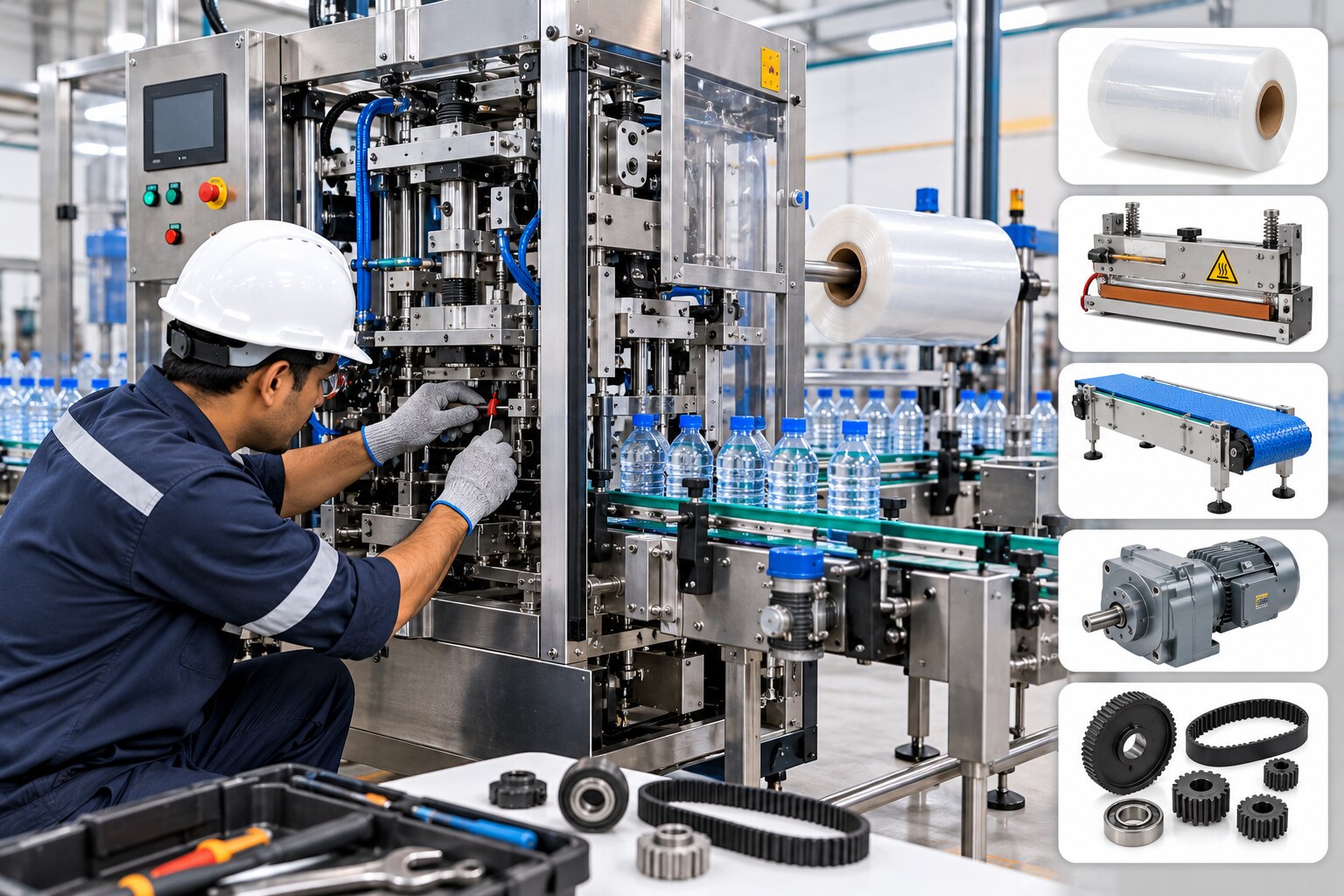
4. Check the process path: nozzle height, filling valves, manifold blockage, pump pressure, cap-feeder alignment, star-wheel setting, guide rails, conveyor speed, and sensor cleanliness. Run a controlled test and measure fill volume, cap torque, and reject rate.
5. Read the PLC or HMI fault code before resetting anything. Isolate overheating motors, exposed wiring, repeated electrical trips, failed interlocks, or contaminated product-contact surfaces; call a qualified technician and do not resume production until the restart test passes.
If the fault follows a component after swapping it with a known-good part, repair that component. If it follows the water, container, utility, or setting, correct that cause instead.
What should you expect from water packaging machine repair in Nagpur?
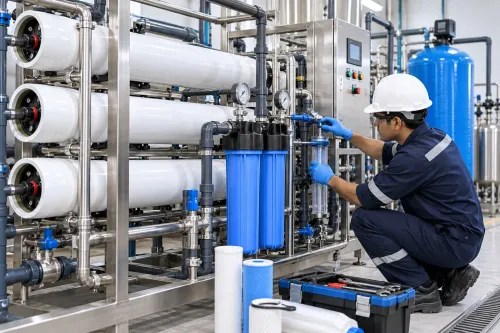
Expect water packaging machine repair in Nagpur to begin with measured evidence, not guesswork. Ask the technician to record inlet water pressure, compressed-air pressure, filling accuracy, conveyor speed, motor current, sensor readings, fault codes, and filter differential pressure before changing parts.
Require these items before the visit:
- A local response-time commitment, remote diagnostics, and an escalation contact for production-stopping faults.
- A critical-spares list covering sensors, solenoid valves, contactors, relays, fuses, pumps, belts, seals, filling nozzles, capper parts, and PLC batteries.
- PLC and HMI program backups, parameter files, administrator passwords, electrical drawings, and the machine’s input-output list.
- Calibration certificates or procedures for flowmeters, pressure gauges, conductivity meters, and level sensors.
| Repair stage | Require | Why it matters |
|---|---|---|
| Before work | Written fault diagnosis, spare-part part numbers, and estimated downtime | Prevents unplanned substitutions and prolonged stoppage |
| During work | Replaced-part identification, measured readings, and wiring or parameter changes | Creates a traceable repair record |
| Before handover | Dry-run, water trial, fill-volume checks, leak test, safety-interlock test, and restart test | Proves the line is safe and stable |
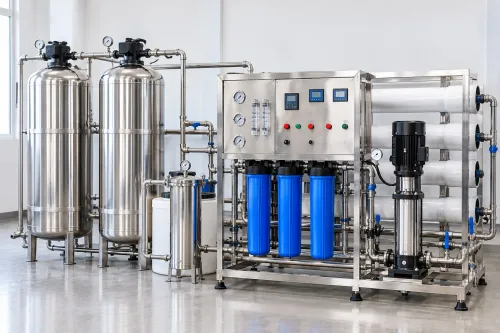
Obtain the operation-and-maintenance manual, cleaning instructions, food-contact material declarations, weld or material records, calibration certificates, and commissioning report. For treatment faults, demand raw-water results, SDI data, membrane-cleaning instructions, and recorded RO recovery; a repaired filler cannot compensate for fouled pretreatment.
Which replacement format fits your output, container, and labour requirements?
Output volume and available labour matter more than a quoted bottles-per-minute figure. Use this comparison:
| Option | Fits when | Wrong choice when |
|---|---|---|
| Semi-automatic filler | You have low or variable output, purchased bottles, and operators available for rinsing, filling, capping, and packing. | Labour cost, inconsistent fill levels, or operator-dependent hygiene already causes losses. |
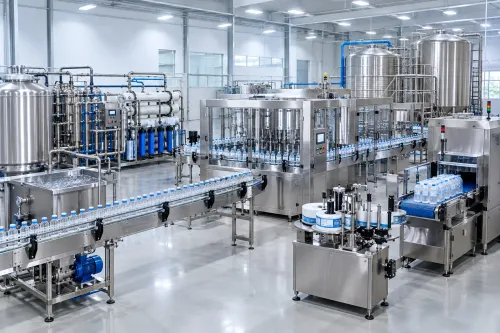
| Automatic PET line | You need repeatable high-volume production using purchased PET bottles or an integrated bottle blower, rinser-filler-capper, labeller, and packer. | Your bottles, neck finishes, or caps are not standardised, or demand cannot keep the line fed. |
| 20-litre returnable-jar line | Your customers return jars and you can staff inspection, washing, sanitising, filling, capping, and rejection of cracked or stained jars. | You lack space, wash-water capacity, or a reliable jar-return system. |
| Pouch system | You sell low-cost single-serve water and accept pouch-film handling, sealing, and secondary packing requirements. | Customers expect rigid containers or your product needs long shelf-life protection. |
| Complete turnkey plant | Treatment, utilities, packaging, controls, and hygiene infrastructure all need coordinated replacement. | Only a pump, VFD, sensor, valve, or manifold has failed. |
When comparing water packaging equipment in nagpur, inspect dead legs, drainability, filler bowls, jar washers, and cleaning records—not just stainless-steel finish. Choose turnkey replacement when unsupported PLCs, absent safety interlocks, unsourceable containers, or uncleanable product-contact sections make individual repairs unreliable.
What must a replacement specification include beyond bottles per minute?
Specify guaranteed saleable containers per hour, not nominal bottles per minute. Require a witnessed test at your bottle size, cap, water format, and shift pattern, with changeovers, rejects, CIP, shortages, labelling, and packing included.
Compare suppliers against the same specification:
| Criterion | Require in writing | Reject or question |
|---|---|---|
| Saleable output | Good containers/hour, test method, reject rate, changeover time | Speed stated without downstream limits |
| Bottle and cap | Bottle drawing, neck finish, material, cap dimensions, fill-level and torque tolerances | “Standard PET” or “standard cap” |
| Utilities | Feed-water flow and pressure, electrical load, compressed-air quality and pressure, drainage, RO recovery tied to raw-water chemistry | Utility figures without water-loss measurements |
| Hygiene | 304 or 316L product-contact materials, cleanable welds, CIP procedure, food-contact declarations | Dead legs, inaccessible surfaces, missing cleaning instructions |
| Treatment performance | Feed and permeate conductivity, flow, pressure, UV intensity, ozone residual, recovery, reject and backwash volumes | Recovery percentage without membrane and cleaning assumptions |
| Compliance records | Factory-acceptance results, calibration certificates, weld records, commissioning report, O&M manual, and documentation for IS 14543 or IS 13428 as applicable | Generic “mineral-water plant” wording |
Price the complete installation: equipment, tanks, pumps, piping, electrical panels, cabling, civil work, drainage, ventilation, installation, validation, training, spares, freight, taxes, and production lost during commissioning. Include RO reject, CIP, washer, rinser, and floor-wash disposal capacity.
Should you repair the existing line or replace it?
Repair is usually the stronger choice when the frame, hygienic pipework, controls, and product-contact surfaces remain serviceable. Replace the line when an unsupported PLC, obsolete container format, missing safety interlocks, or uncleanable contamination source will keep creating failures.
| Factor | Repair existing line | Replace line |
|---|---|---|
| Cost and downtime | Price parts, labour, testing, and lost production; confirm a restart date. | Include removal, civil work, installation, validation, training, and commissioning downtime. |
| Sanitation | Inspect welds, dead legs, seals, filling valves, and clean-in-place access. | Require cleanable product-contact design and food-contact material declarations. |
| Spare parts | Confirm local stock for pumps, VFDs, sensors, valves, PLC modules, and seals. | Obtain a three-year critical-spares list and obsolescence commitment. |
| Energy and water | Measure actual kWh, RO reject, backwash, rinsing, and CIP losses. | Demand guaranteed good containers per hour, stated utilities, and recovery tied to your raw-water analysis. |
| Supplier support | Require response time, remote diagnostics, drawings, backups, and restart testing. | Require commissioning records, calibration certificates, manuals, and operator training. |
Before choosing a packaged water machine supplier in Nagpur, request the PLC/HMI program, passwords, electrical drawings, and sensor-calibration procedure. Orenus Water age technology belongs on the comparison list only after it supplies the same evidence.
Choose repair when the measured total is lower and reliability is demonstrable; choose replacement when repeated repairs cannot restore sanitation, output, or supportability.
Related products
 | Mineral Water Plant Capacity 200 BPM Power Consumption 2 hp Bottle Type plastic Usage/Application industrial Packaging machines are used to package products or... View product → |
 | Mineral Water Plant Packaged Drinking Water Bottle Plant Filling Capacity 10 Bottle/min Water Purification Process RO Automation Grade Semi-Automatic Country of Origin Made in India Container Type Pouch For... View product → |
Frequently asked questions
Which water packaging machine faults require an immediate shutdown?
Stop production for contamination risk, unsafe electrical faults, uncontrolled leaks, failed safety interlocks, damaged guarding, or packs that cannot be verified for fill, seal, or cap integrity.
How should you troubleshoot treatment, filling, capping, and electrical faults?
Isolate the affected stage, check water quality and pressure first, then inspect pumps, filters, sensors, nozzles, cap handling, wiring, alarms, and safety circuits before restarting with test packs.
What should you expect from water packaging machine repair in Nagpur?
Ask the repair provider to document the fault, replacement parts, testing method, restart checks, expected downtime, warranty, and response arrangements before work begins.
Which replacement format fits your output, container, and labour requirements?
Match the machine to bottle or jar size, container material, neck finish, required output, shift pattern, available operators, floor space, and the level of rinsing, filling, capping, labelling, and packing automation.
What must a replacement specification include beyond bottles per minute?
Include container dimensions, fill volume, water quality targets, utilities, electrical supply, compressed-air needs, changeover time, accuracy, cap type, hygienic design, controls, guarding, documentation, installation, and service access.
Related products
 | Mineral Water Plant Filling Capacity 30 Bottle/min Type Of Machines Fully Automatic Laboratory Chemical Laboratory Customization Yes Driven Type Electric Voltage 380V... View product → |
 | Mineral Water Plant Application Jar Filling Machine Type Automatic Filling Material Liquid Driven Type Electric Country of Origin Made in India Minimum order quantity: 5... View product → |
 | Mineral Water Plant Filling Capacity 100 bottle/min Water Purification Process RO Automation Grade Automatic Water Filling Method Bottle Installation/Civil Work... View product → |
 | RO Water Plant RO Capacity 500-1000 (Liter/hour) Material Stainless Steel Automation Grade Automatic Usage/Application Industrial Max Water Recovery Rate 65-70 %... View product → |
Keywords