Hard water is not defined by a TDS meter alone: calcium and magnesium hardness determine scale, while TDS measures a wider group of dissolved substances. By testing the feed water and matching the treatment to your actual objective, you can decide whether you need a softener, an RO plant, or both.
Key takeaways
- Use a softener to reduce calcium and magnesium without removing dissolved salts.
- Choose RO when you need lower TDS, specific contaminant removal, or purified product water.
- Test hardness, TDS, alkalinity, iron and microbiology before selecting equipment.
- Compare results from borewell, municipal and blended sources at the point of use.
What “hard water” means on a laboratory report
A laboratory report defines hardness as the calcium and magnesium dissolved in water, reported as total hardness in mg/L (or ppm) as CaCO3. Temporary hardness comes mainly from bicarbonates and can form scale when heated; permanent hardness comes from sulphates and chlorides and remains after boiling.
Use these bands as a practical starting point:
- 0–60 mg/L as CaCO3: soft
- 61–120 mg/L: moderately hard
- 121–180 mg/L: hard
- Above 180 mg/L: very hard
The USGS bands do not alone decide whether you need treatment. A heater, boiler, laundry or cooling system can require softening at a lower value because scale damages heat transfer, while a drinking-water application may require RO for high TDS or another specified quality target.
A softener exchanges calcium and magnesium for sodium or potassium; it reduces hardness but does not substantially reduce TDS. RO removes dissolved salts through a membrane and produces a reject stream.
Do not infer Nagpur hardness from the locality or TDS reading. Municipal, borewell and blended supplies vary by source and season. For hard water treatment options in nagpur, submit a fresh raw-water sample and request:
- Total hardness, TDS or conductivity, pH and alkalinity
- Iron, manganese, silica, chloride, sulphate and nitrate
- Turbidity and microbiological quality
Compare the result with your equipment’s water-quality limit and intended use before choosing treatment.
When a water softener is the correct treatment
Choose a softener when calcium and magnesium are causing scale in boilers, water heaters, laundry equipment, cooling systems or plumbing, but the water does not need low dissolved-salt content. A softener exchanges hardness ions for sodium or potassium; it does not substantially lower TDS or remove many other dissolved contaminants.
| Option | What it addresses | Choose it when |
|---|---|---|
| Water softener | Calcium and magnesium scale | Hardness is the main equipment problem and existing TDS is acceptable |
| RO plant | Dissolved salts and specified ionic quality | You need low-TDS process or drinking water, not only scale control |
| Softener followed by RO | Scale protection plus low-TDS product water | The feed is both hard and high in TDS |
Treat “ro plant versus water softener” as a water-quality decision, not a capacity or price comparison. A softener requires salt, regeneration water, valve controls and a drain for chloride-containing brine. Include those recurring costs in the quotation; a low purchase price can hide expensive operation.
Do not assume softened water is automatically suitable as the final drinking water. Sodium rises as hardness is exchanged, so check feed hardness, the permitted sodium level and any blending requirement.
Choose a softener alone when scale control is the objective; specify RO or a combined treatment train when the finished water must meet a low-TDS or defined drinking-water standard.
When RO is necessary—and why hardness still matters
An RO plant provides benefits a softener cannot when the target is low dissolved-salt water, not merely scale control. Use RO for drinking water with a specified TDS limit, process water, or feed containing high TDS, chloride, sulphate, nitrate, or other dissolved contaminants.
A softener exchanges calcium and magnesium for sodium or potassium; it does not desalinate, disinfect, or substantially lower TDS.
RO still needs hardness control. Calcium carbonate can scale the membrane, reduce permeate flow, and increase cleaning frequency. If the feed is hard, install a correctly sized softener or antiscalant system before the RO, then manage the concentrate reject stream and post-treat the permeate where required.
| RO plant | Main benefit | Limitation |
|---|---|---|
| Softener | Removes scale-forming calcium and magnesium | Raises sodium or potassium and leaves most TDS |
| RO | Reduces TDS and many dissolved contaminants | Produces reject water and needs pretreatment |
| Softener plus RO | Protects the membrane while producing low-TDS water | Requires more equipment, controls, and maintenance |
Do not treat hardness and TDS as interchangeable. IS 10500:2012 gives total hardness limits of 200 mg/L as CaCO₃ acceptable and 600 mg/L permissible when no alternate source exists, while TDS limits are 500 and 2,000 mg/L.
A softened stream is not automatically the best drinking water: check sodium, blending, and the required product standard before sending it to a tap.
How to test Nagpur borewell, municipal or blended water before buying
Do not size equipment from Nagpur’s locality name or one TDS reading. Test borewell, municipal and blended water separately at the point where treatment will operate, because source quality and seasonal chemistry can differ. Collect a recent laboratory report before comparing hard water treatment options in Nagpur.
Use this testing workflow:
- Take samples after the borewell pump, at the municipal inlet and after blending. Record the date, source, operating hours and whether the sample followed heavy rain or prolonged pumping.
- Test total hardness as mg/L (or ppm) as CaCO3, TDS or conductivity, pH, alkalinity, iron, manganese, silica, chloride, sulphate, nitrate, turbidity and microbiological quality.
- Record maximum simultaneous flow, daily volume, hours of operation, available feed pressure, storage capacity and required treated-water flow. For RO, specify recovery, reject-drain capacity and the required permeate quality.
- For a softener, calculate hardness load from hardness and peak flow, then check resin capacity, salt dose, regeneration interval, rinse-water volume and allowable pressure drop. Undersizing causes hardness leakage before regeneration.
The ro plant versus water softener choice follows the test result and the water’s job:
| Option | Test or operating condition | Design consequence |
|---|---|---|
| Softener | Hardness is the main problem; TDS remains acceptable | Size ion-exchange capacity, salt storage and brine drainage |
| RO plant | Low-TDS or specified drinking-water quality is required | Design membranes, pretreatment, recovery and reject handling |
| Both | Hardness and TDS are high | Soften before RO to control scaling and protect membrane life |
A practical selection rule for an Orenus system
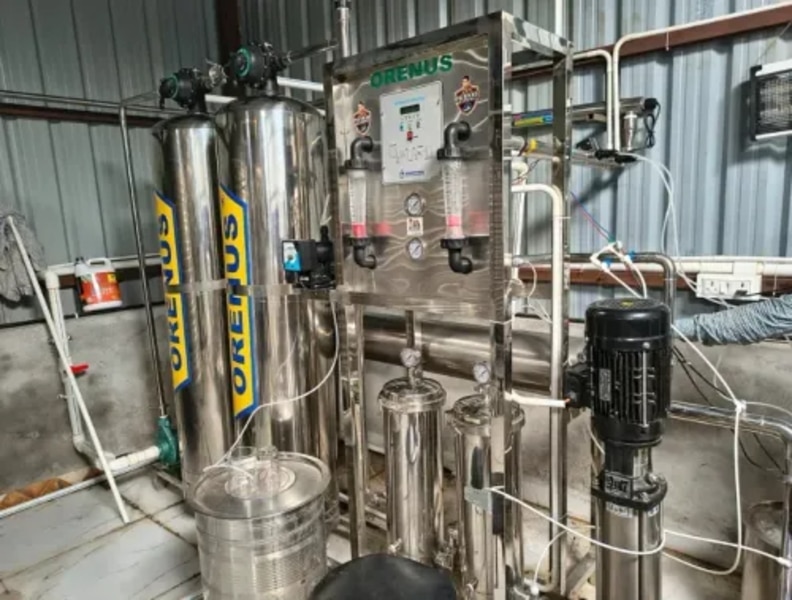
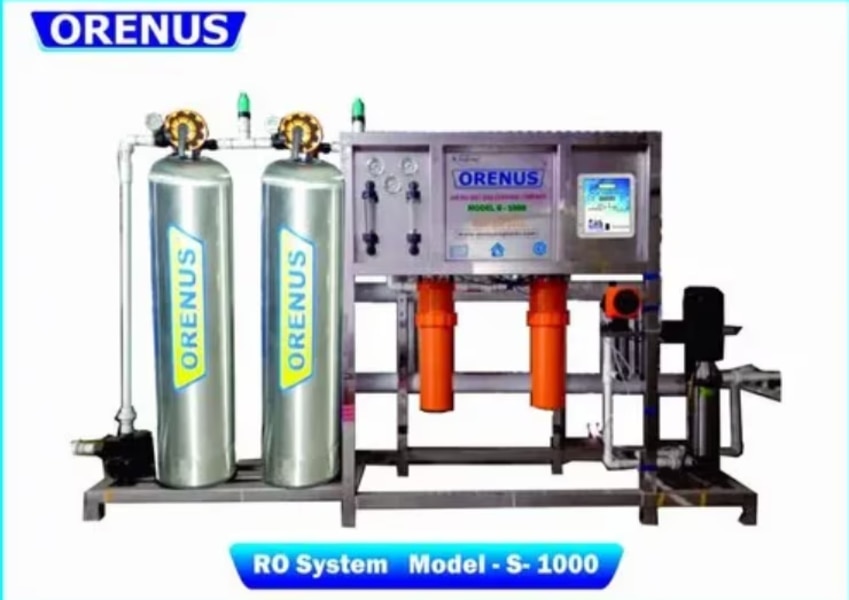
Choose by the water-quality target, not by the hardness number alone. For an orenus ro plant or water softener for hard water in nagpur, require a recent laboratory report from the actual borewell, municipal connection or blended line; source and season can change the design.
| Option | What it does | Select it when |
|---|---|---|
| Softener | Exchanges calcium and magnesium for sodium or potassium; hardness falls but TDS remains nearly unchanged | Scale is the main risk in boilers, heaters, laundries, cooling systems or plumbing |
| RO plant | Pushes water through a membrane, reducing TDS and many dissolved contaminants while producing reject water | The product requires low-TDS water or the feed has high TDS beyond hardness |
| Softener plus RO | Protects the membrane from hardness scale, then reduces dissolved salts | The feed is both hard and high-TDS, and consistent low-TDS permeate is required |
Do not compare an orenus ro plant hard water quotation by litres per hour alone. Check guaranteed permeate TDS, recovery percentage, reject flow, feed-temperature and pressure assumptions, normalized membrane performance, cleaning method, instruments, replacement-membrane allowance and post-treatment.
A softener quote must state salt per regeneration, rinse-water volume, valve controls and brine-disposal arrangements; its purchase price hides operating cost. Orenus Water age technology can help translate these figures into a pretreatment and capacity specification, but your laboratory report must control the final selection.
Related products
 | RO Water Plant Capacity 500 -10000 Material Stainless Steel Technology Japanese Brand ORENUS RO Capacity(Litre/Hr) 3000 LPH Usage/Application Water Purification... View product → |
 | Mineral Water Plant RO Capacity(Litre/Hr) 1000 LPH Material FRP Automation Grade Semi Automatic RO Membrane Type Thin-Flim Composite (TFC) Media Activated Carbon + sand... View product → |
Frequently asked questions
What does hardness mean on a laboratory water report?
Hardness is the combined calcium and magnesium concentration, reported as mg/L or ppm as CaCO3. Temporary hardness is linked to bicarbonates and forms scale when heated; permanent hardness comes from sulphates and chlorides and remains after boiling.
When is a water softener the right treatment for hard water?
Choose a softener when calcium and magnesium are causing scale in boilers, heaters, pipes or washing equipment, but you do not need to remove most dissolved salts. A softener exchanges calcium and magnesium for sodium or potassium and does not produce purified drinking water.
When is an RO plant necessary for hard water?
Use RO when the water requires substantial reduction of TDS or dissolved contaminants, or when the treated water is used for drinking-water production, bottling, process water or another application with a defined purity limit. Check hardness because high hardness can scale RO membranes and increase pretreatment needs.
How should you test Nagpur borewell, municipal or blended water before buying?
Collect a representative sample from the actual point of use and test total hardness, TDS, pH, alkalinity, electrical conductivity, iron, chloride, sulphate, nitrate and microbiology. Test each source separately and test blended water after mixing because source quality can change the treatment design.
How do you choose between an Orenus RO plant and water softener?
Select a softener when scale control is the main requirement and dissolved salts can remain. Select an Orenus RO plant when your specification requires lower TDS or broader dissolved-contaminant removal. Use the laboratory report, daily flow, peak demand and required water quality to define the system.
Related products
 | RO Water Plant RO Capacity 500-1000 (Liter/hour) Material Stainless Steel Automation Grade Automatic Usage/Application Industrial Max Water Recovery Rate 65-70 %... View product → |
 | Mineral Water Plant Material Stainless Steel Working Pressure 100 PSI RO Capacity 3000 ltr/hr Deliver Type Pan India Installation Service Yes Country of Origin Made in... View product → |
Keywords