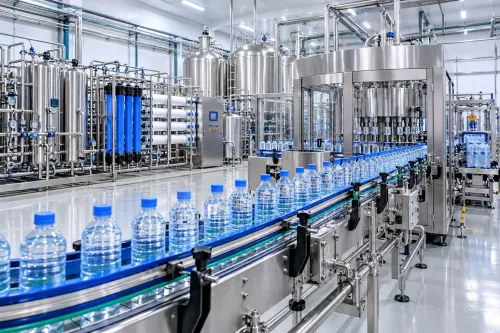
Water used in manufacturing can influence product quality, heat transfer, equipment life, cleaning effectiveness, and process consistency. The required quality may range from filtered utility water to highly controlled process water, depending on the industry and application.
An Industrial Water Plant Manufacturer must therefore understand what the treated water will do inside the facility. For industrial buyers in Nagpur and other manufacturing areas of Maharashtra, selecting equipment only by flow capacity can result in an incomplete solution.
Industrial Water Has Multiple Roles
A single facility may use water for several purposes, including:
- Boiler feed
- Cooling systems
- Component washing
- Food or beverage processing
- Chemical preparation
- Surface treatment
- Pharmaceutical operations
- Equipment rinsing
- General utility use
- Product formulation
Each use can have a different acceptable range for hardness, dissolved solids, silica, conductivity, microbial load, or other parameters.
Water suitable for floor washing may not be appropriate for a boiler. Similarly, water used for a final product rinse may require stricter treatment than water used during an early cleaning stage.
Source Water Shapes the Plant Design
Industrial water may come from borewells, municipal supply, surface sources, tankers, or a combination of sources. Treatment should be based on representative testing, including expected seasonal variations.
The analysis may reveal challenges such as:
- High hardness
- Elevated total dissolved solids
- Suspended matter
- Iron
- Organic contamination
- Silica
- Colour or odour
- Microbial concerns
- Variable pH
These findings guide the selection of pretreatment, membrane processes, ion exchange, disinfection, and polishing stages.
Common Treatment Technologies
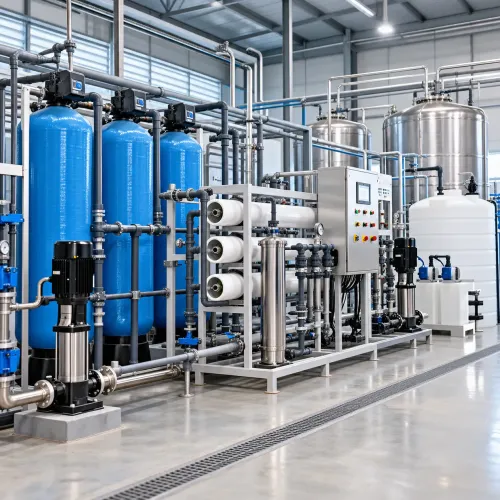
Industrial plants may use one or several technologies in sequence.
Filtration
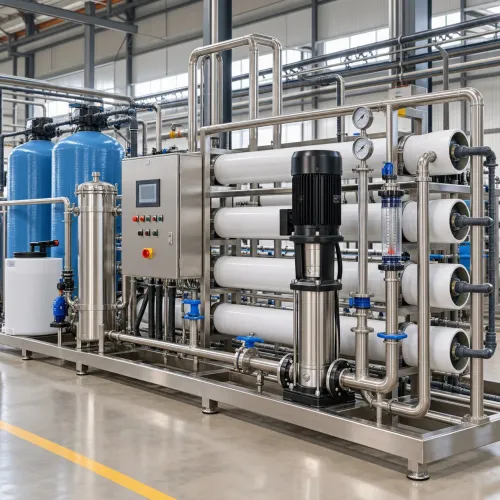
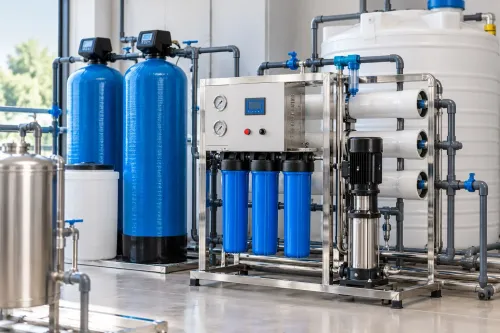
Sand, multimedia, and cartridge filters help reduce suspended contaminants and protect downstream equipment.
Activated Carbon Treatment
Activated carbon may be used to address chlorine, odour, colour, or certain organic compounds, depending on the application.
Water Softening
Softeners reduce hardness that can contribute to scale formation in boilers, heat exchangers, pipelines, and process equipment.
Reverse Osmosis
RO membranes reduce dissolved salts and can produce water suitable for a wide range of industrial processes.
Demineralisation
Ion-exchange systems can remove dissolved ionic impurities where lower conductivity or more specialised water quality is required.
Disinfection
UV, ozone, or chemical treatment may be integrated when microbial control is relevant.
Process Demand Determines Capacity
Industrial consumption is rarely uniform. A plant may need water continuously, in production batches, or during a specific cleaning cycle.
Capacity planning should account for:
- Average daily consumption
- Maximum hourly requirement
- Production shifts
- Batch volumes
- Treated-water storage
- Downtime tolerance
- Future production growth
- Standby or redundancy needs
Where an interruption could stop manufacturing, buyers may consider buffer storage, duty-and-standby pumps, or modular capacity.
Utilities and Layout Cannot Be Ignored
Industrial treatment equipment requires adequate feed pressure, electrical supply, drainage, chemical-handling arrangements, and service access. The layout should allow operators to inspect instruments, replace filters, remove membranes, and handle regeneration or cleaning safely.
Reject streams, backwash water, and regeneration waste must also be considered during planning. Disposal or reuse decisions should be based on water characteristics, operational suitability, and applicable requirements.
Treatment Should Support the Process
Orenus Water Age Technology works with industrial buyers in Nagpur to configure water-treatment systems around process requirements rather than generic equipment ratings. A complete assessment connects source-water analysis with output specifications, production demand, utility availability, and maintenance planning.
The value of an industrial water plant lies in the consistency it brings to the operation. When correctly designed and maintained, it can help reduce scaling, protect equipment, improve process control, and create a more dependable foundation for production.
Keywords